

Editor's note: This is a guest post from Beth Boynton, RN, MS
Not long ago, as a staff nurse in a direct care facility, I was faced with an unsafe work situation when I was assigned to supervise a medication assistant on an adjacent unit although I had my hands full on my own unit. The additional responsibility pushed me beyond acceptable limits and jeopardized quality of care. I was surprised, frustrated and angry. It was an evening shift and I made it through, but I went home exasperated.
I didn’t sleep that night, struggling to come up with language to address the issue with the appropriate people. While I questioned myself (Should I have been able to handle both situations?), I also felt the expectation was disrespectful of me, my work, and—ultimately—quality of care standards.
The next morning I called the Nurse Manager. I explained my concerns about the previous night’s assignment. She said it was part of my job expectation and that if I didn’t think I could handle it, I should talk with the Director of Nurses.
My supervisor’s comments felt invalidating and intimidating. What to do? Even for me—author, national speaker, and nurse of 25 years—taking this concern to a higher level felt risky. That said, as a student of assertiveness in my personal and professional life, I have learned to respect my intuition even, and especially, when insecurities pop up.
The Assertiveness Dilemma
The practice of assertiveness requires confidence, self-esteem and a sense of trust. It is important to advocate for my patients and myself, and often there is an uneven power dynamic. The unwritten pressure to do the work and not complain is ever present. Am I an inadequate nurse? Is my job at risk? Why do colleagues with similar frustrations talk to me about them but not to management?
Most of my work as a nurse consultant is grounded in first-hand knowledge and appreciation of nursing and the challenging work we do. We are intelligent, capable, and compassionate professionals with a huge potential to improve healthcare. I believe all efforts to help us communicate assertively and respectfully will lead to safer, more compassionate hospitals as well as to rewarding careers.
Why don’t we speak up?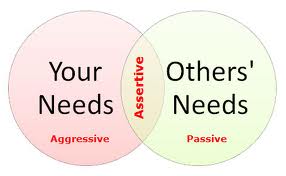
- We don’t believe anyone’s listening,
- We might be chastised, demeaned, or belittled.
- We fear putting our jobs at risk.
Yet in spite of these obstacles, statistics show that nurses and other health care staff are beginning to understand their critical role in creating the health care environment. And because of this the environment is changing. Speaking up is saving lives. There are still advances needed, and the strides in opening up communication are where progress is being made.
 What Can Staff Nurses Do to Practice Assertiveness?
- Trust and respect your feelings, knowledge, skills and intuition.
- Use ownership language.
- Stay open to problem-solving with leadership and colleagues.
How Can Leaders Help Staff Nurses to Practice Assertiveness?
- Validate staff’s concerns.
- Ask what nurses need in order to meet a goal or work expectation.
- Advocate for resources and/or limit-setting.
At other times in my life, I might have given up after this phone call with my supervisor. Not this time. I did speak with the director of nurses and she heard my concerns and honored my request. I was relieved and grateful.
I love teaching and facilitating workshops on assertive communication, because when I practice what I teach, I realize how hard it is and how much courage it takes. I also know that those who do the hard work of holding critical conversations model it for others and create safer, more respectful health-care for all of us.
====================================
 Beth Boynton, RN, MS is the author of Confident Voices: The Nurses’ Guide to Improving Communication & Creating Positive Workplaces and a regular columnist for the ANA-Maine Journal. Read more about Beth and her work, and sign up for her newsletter at bethboynton.com.

Let’s discuss this post in the comments
Note: you don’t need to “log in” or “sign up” to comment. Simply enter your comment, then under the “sign up with Disqus” field enter your name. Then enter your email address and click the checkbox (that will appear) with the label “I’d rather comment as a guest.”